

Evaluating modern economic power requires looking beyond industrial output and physical manufacturing to examine where global capital pools and circulates. Across international territories, global financial centers act as the central nervous system of world wealth creation. As institutional investors, venture funds, and multinational corporations route trillions of dollars through sophisticated banking networks, the stability and depth of these financial hubs dictate global liquidity and economic growth.
Key Takeaways
- Capital Allocation Hubs: Major financial centers provide the essential liquidity and credit facilities required to fund international trade and enterprise expansion.
- Agglomeration Economics: Co-locating banks, legal firms, regulatory bodies, and stock exchanges creates an unmatched ecosystem for rapid financial transactions.
- Digital Transformation: Modern banking hubs are rapidly integrating algorithmic trading, blockchain settlement systems, and artificial intelligence risk assessment tools.
- Sovereign Influence: Control over premier financial infrastructure grants nations profound geopolitical leverage and stable long-term currency strength.
Macroeconomic Mechanics of Financial Hubs
To understand how global financial centers fuel national prosperity, economists analyze the direct correlation between capital market depth and gross domestic product expansion. Unlike localized commercial banking, premier financial capitals—such as New York, London, Singapore, and Hong Kong—handle cross-border capital flows that connect surplus nations with developing investment targets.
When a city successfully establishes itself as a trusted destination for capital, it attracts foreign direct investment, multinational headquarters, and top-tier talent. This concentration of financial assets lowers borrowing costs for domestic enterprises, accelerating business innovation and infrastructure development across the entire national economy.
Comparative Overview of Leading Financial Capitals
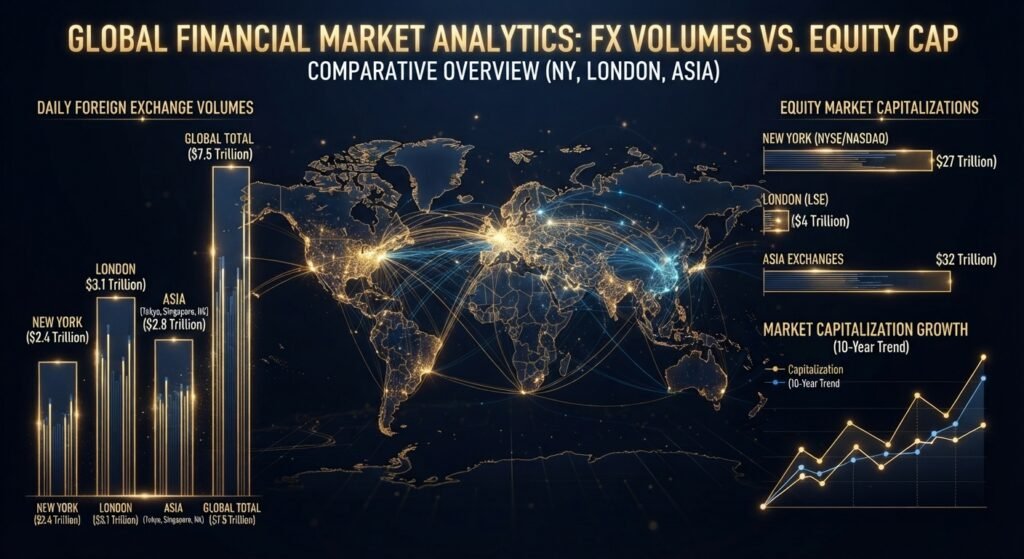
A review of contemporary international finance metrics highlights how dominant economic capitals drive global liquidity:
| Financial Center | Primary Market Focus | Global Influence & Role | Key Strategic Advantage |
| New York (USA) | Global equity markets, debt issuance | Dominates worldwide capital raising and USD liquidity | Deepest venture capital and institutional markets |
| London (UK) | Foreign exchange, international banking | Premier hub for cross-border currency trading and insurance | Unmatched time zone overlap and legal framework |
| Singapore / Hong Kong | Asian trade finance, wealth management | Gateway for capital allocation across emerging Asia | Pro-business tax structures and strategic logistics |
Key Channels Driving Wealth Creation and Investment
1. Facilitating Liquidity and Corporate Capital Formation
The primary function of global financial centers is to transform dormant savings into productive economic investments. Through initial public offerings (IPOs), bond issuances, and syndicated loans, these hubs supply corporations with the multi-billion-dollar funding required to scale operations and pioneer new technologies.
2. Technological Innovation in Modern Banking
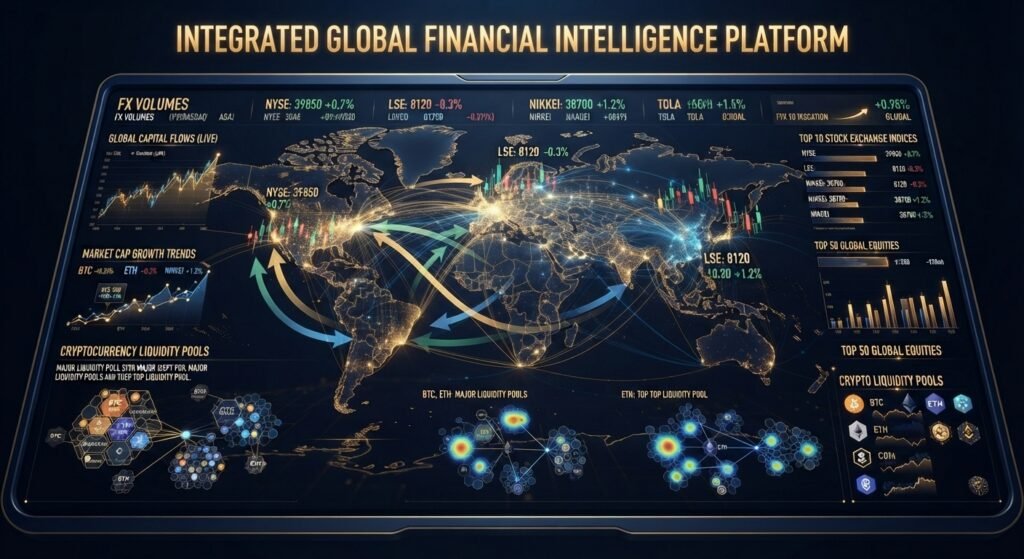
The architecture of global finance is undergoing a structural revolution. Leading banking capitals are pioneering digital asset custody, high-speed algorithmic execution, and automated compliance systems. These innovations reduce operational friction and attract tech-forward financial institutions.
Navigating Regulatory Headwinds and Systemic Risks
Despite their profound economic contributions, maintaining the stability of global financial centers requires continuous navigation of complex structural challenges:
- Regulatory Fragmentation: Divergent international compliance standards, anti-money laundering (AML) protocols, and cross-border tax laws create continuous friction for multinational banks.
- Cybersecurity and Systemic Vulnerability: As financial infrastructure becomes entirely digital, defending against sophisticated cyber threats is critical to preventing market-wide liquidity shocks.
- Geopolitical Friction: Trade tensions and economic sanctions can abruptly redirect capital flows, forcing financial institutions to restructure their global risk models.

Conclusion
The enduring influence of global financial centers demonstrates that the health of international trade is deeply tied to the efficiency of capital markets. Nations that foster transparent regulatory frameworks, embrace financial technology, and maintain deep liquidity pools will continue to lead worldwide wealth creation and economic stability.
Frequently Asked Questions (FAQs)
What defines global financial centers?
They are major metropolitan hubs that house stock exchanges, multinational banks, legal institutions, and regulatory bodies, collectively managing trillions in cross-border capital flows.
Which cities are currently recognized as the top financial capitals?
New York and London consistently rank as the world’s leading financial centers, closely followed by dynamic Asian hubs like Singapore, Hong Kong, and Tokyo.
How do financial centers contribute to national economic growth?
They provide efficient capital allocation, lower business borrowing costs, attract foreign direct investment, and create high-paying employment sectors that stimulate domestic GDP.
What role does financial technology (FinTech) play in modern banking hubs?
FinTech innovations—including blockchain settlements, automated trading algorithms, and digital banking platforms—enhance transaction speed, lower costs, and modernize market infrastructure.
Global Financial Stability Report Breakdown
This analytical resource breaks down how international institutions track capital liquidity, market risks, and global financial center performance.
1 thought on “Global Financial Centers Driving Wealth Creation”