

Analyzing global economic health requires looking beyond aggregate gross domestic product to examine how foundational workers are compensated. Establishing equitable minimum wage standards serves as a critical baseline for stabilizing household incomes, reducing poverty, and balancing labor market dynamics.
However, major industrial nations approach statutory wage floors through vastly different policy lenses. While some advanced economies enforce rigid national hourly mandates, others rely on decentralized collective bargaining agreements, creating a complex patchwork of worker protections across international markets.

Key Takeaways
- Varying Compensation Models: Top global economies split between legislated national statutory minimums and negotiated sector-wide collective bargaining frameworks.
- Nominal vs. Real Value: High gross pay rates frequently get offset by local income taxes, mandatory social security contributions, and steep metropolitan housing costs.
- Indexation and Inflation: Leading nations increasingly tie their wage floors directly to inflation indexes or median earnings growth to prevent cost-of-living erosion.
- The Productivity Paradox: Balancing high hourly compensation with corporate competitiveness remains a central challenge for lawmakers navigating modern labor markets.
The Core Philosophy: Statutory Mandates vs. Collective Bargaining
To understand how minimum wage standards function globally, economists evaluate the regulatory mechanisms driving wage adjustments. Nations like Germany, France, and Australia utilize centralized statutory floors designed to protect low-income earners from market exploitation. For instance, Germany’s structured adjustments and Australia’s robust hourly rates anchor their respective labor policies.
Conversely, several prominent economic powerhouses—such as Sweden, Denmark, and Singapore—operate entirely without a government-mandated national wage floor. Instead, they empower labor unions and employer associations to negotiate legally binding collective agreements tailored to specific industries. This decentralized structure ensures compensation scales dynamically with sector-specific productivity rather than a blanket national formula.
Comparative Breakdown: Global Wage Frameworks
A review of structural labor indicators highlights how different economic models approach baseline compensation:
| Economic Region | Primary Implementation Method | Typical Adjustment Frequency | Main Policy Objective |
| Western Europe | National statutory minimum or sectoral agreements | Annual or bi-annual reviews | Mitigating income inequality and matching inflation |
| North America | Federal, state, or provincial legislative mandates | Irregular legislative updates | Establishing basic poverty-reduction safety nets |
| Nordic Economies | Pure collective bargaining (No statutory floor) | Continuous industry negotiations | High labor flexibility with strong union consensus |
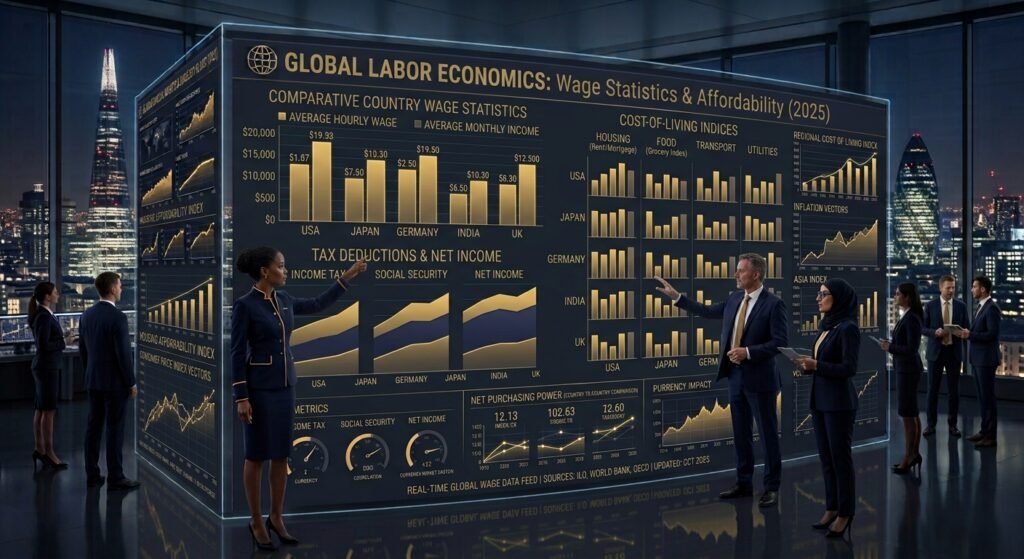
How Economic Output Influences Compensation Policies
1. The Burden of Taxation and Cost of Living
Evaluating gross hourly figures tells only part of the story. High nominal wages in countries like Germany or the United Kingdom are subject to progressive income taxes and employee social insurance contributions. Consequently, real take-home pay depends heavily on local fiscal policies and purchasing power parity (PPP).
2. Balancing Inflation and Business Viability
Policymakers face a delicate balancing act when revising baseline wages. Rapid mandatory increases can alleviate immediate cost-of-living pressures for low-wage earners, but they risk triggering operational strains for small-to-medium enterprises unless matched by productivity gains.

Conclusion
The ongoing evolution of minimum wage standards demonstrates that protecting workforce welfare is essential for sustainable economic resilience. Whether managed through strict legislative decrees or collaborative union agreements, establishing fair baseline compensation ensures that global financial growth translates into tangible improvements in everyday living standards.
Frequently Asked Questions (FAQs)
What are minimum wage standards?
Minimum wage standards refer to the legally mandated or negotiated lowest hourly, weekly, or monthly compensation that employers must pay to workers for their labor.
Why do some developed countries not have a national minimum wage?
Countries like Sweden and Switzerland rely on robust collective bargaining agreements between trade unions and employers rather than government legislation to set adaptive wage structures.
How do taxes affect minimum wage earnings?
Gross minimum wages are subject to income taxes and social security deductions, meaning actual take-home pay varies significantly depending on each country’s fiscal policy.
Are minimum wages adjusted for inflation?
Many advanced economies automatically index their wage floors to inflation rates or median wage growth to ensure that low-income workers maintain their purchasing power over time.
1 thought on “Minimum wage standards across the world top economies”