
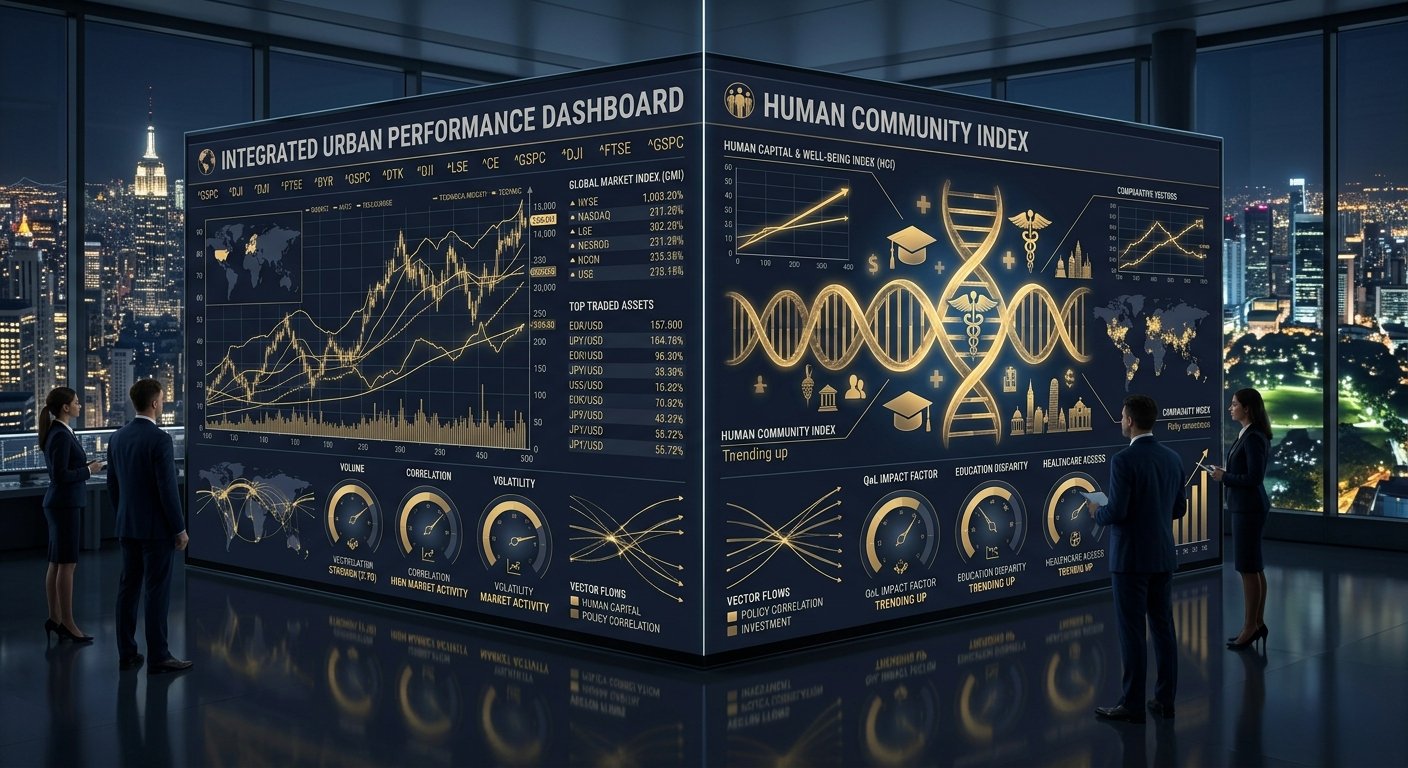
Evaluating national prosperity has long relied on raw financial accounting, yet monetary metrics alone frequently fail to reflect the true quality of human life. For decades, traditional economists treated gross domestic product as the ultimate benchmark of a nation’s triumph, ignoring how wealth is actually distributed among citizens. Analyzing the core debates surrounding human development index vs pure gdp reveals why this traditional perspective is shifting.
Key Takeaways
- The Limitation of Raw Output: Gross domestic product measures total economic production and market value, but it completely ignores income inequality, environmental degradation, and public health standards.
- The Three Pillars of Progress: The Human Development Index (HDI) evaluates a nation based on three fundamental dimensions: a long and healthy life, access to knowledge, and a decent standard of living.
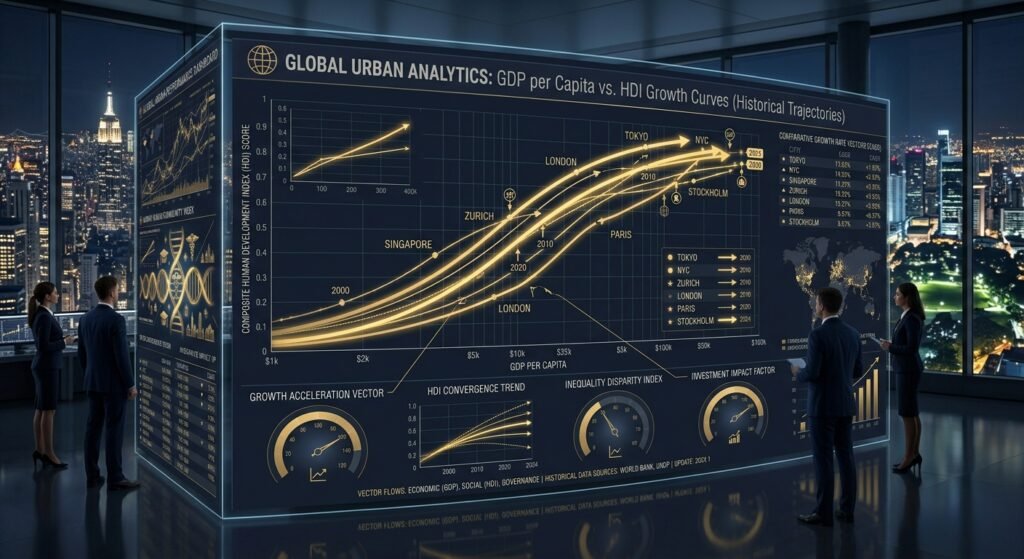
- Policy Divergence: Two countries can share an identical GDP per capita yet experience vastly different human development outcomes depending on public spending priorities.
- Redefining Wealth: True macroeconomic success requires balancing financial growth with robust social infrastructure, universal education, and accessible healthcare systems.
The Core Philosophy: Economic Output vs. Human Capability
To analyze the ongoing debate of human development index vs pure gdp, economists must examine what each metric is fundamentally designed to capture. Established in the mid-20th century, GDP calculates the total monetary value of all finished goods and services produced within a country. While it remains an essential tool for tracking short-term business cycles and market activity, it treats a billion dollars spent on environmental disasters or industrial pollution the same as an investment in schools or hospitals.
In contrast, the Human Development Index—pioneered by the United Nations Development Programme (UNDP)—shifts the core criteria of assessment from corporate monetary flows back to human capabilities. By evaluating life expectancy at birth, expected years of schooling, mean years of schooling, and gross national income per capita, this composite framework creates a balanced picture of what people can actually do and be in society.
Comparative Breakdown: Economic vs. Human Metrics
A review of structural indicators highlights how these two major evaluation models differ in practice:
| Evaluation Metric | Primary Core Focus | Key Indicators Measured | Main Limitation |
| Pure GDP | Total market production and commercial scale | Total consumer spending, government investments, net exports | Ignores wealth distribution, health, education, and quality of life |
| Human Development Index | Human capabilities and living standards | Life expectancy, expected and mean schooling, GNI per capita | Does not directly account for internal inequality or ecological pressures |
Why Economic Growth Does Not Always Equal Human Well-Being
1. The Disconnect in Resource Distribution
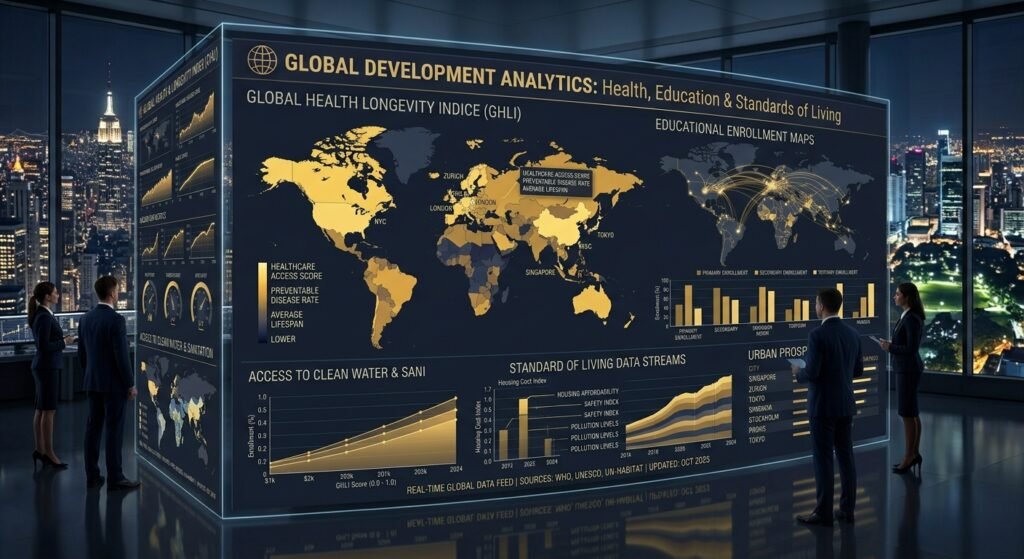
A nation can register staggering GDP expansion driven by capital-intensive industries while large segments of its population experience declining living standards, inadequate healthcare, and poor educational infrastructure. When financial gains concentrate heavily at the top, pure economic indicators paint a misleadingly optimistic picture of national health.
2. Investing in Long-Term Human Capital
Sustainable national prosperity requires treating education and healthcare as primary economic catalysts rather than secondary expenses. Nations that successfully bridge the gap between monetary wealth and human development foster resilient, innovative workforces capable of adapting to future technological shifts.
Conclusion
The ongoing comparison of human development index vs pure gdp proves that counting money alone is insufficient for evaluating a thriving society. While economic output remains vital for funding public services, true national success is measured by how effectively that wealth translates into longer, healthier, and more educated lives for all citizens.
Frequently Asked Questions (FAQs)
What is the main difference between GDP and the Human Development Index?
GDP measures the total monetary value of economic production within a country, whereas the Human Development Index evaluates broader social progress by combining health, education, and standard of living metrics.
Why is pure GDP considered an incomplete measure of success?
GDP fails to account for income inequality, environmental health, volunteer work, public safety, and overall human well-being, focusing strictly on commercial market transactions.
What three dimensions are used to calculate the Human Development Index?
The HDI is calculated using three core dimensions: a long and healthy life (measured by life expectancy), access to knowledge (measured by schooling years), and a decent standard of living (measured by GNI per capita).
Can a country have a high GDP but a low Human Development Index score?
Yes, nations with massive revenues from specific raw commodity exports can exhibit high GDP per capita while lagging significantly in healthcare access, literacy rates, and general living standards.
1 thought on “Human development index vs pure gdp success analysis”