
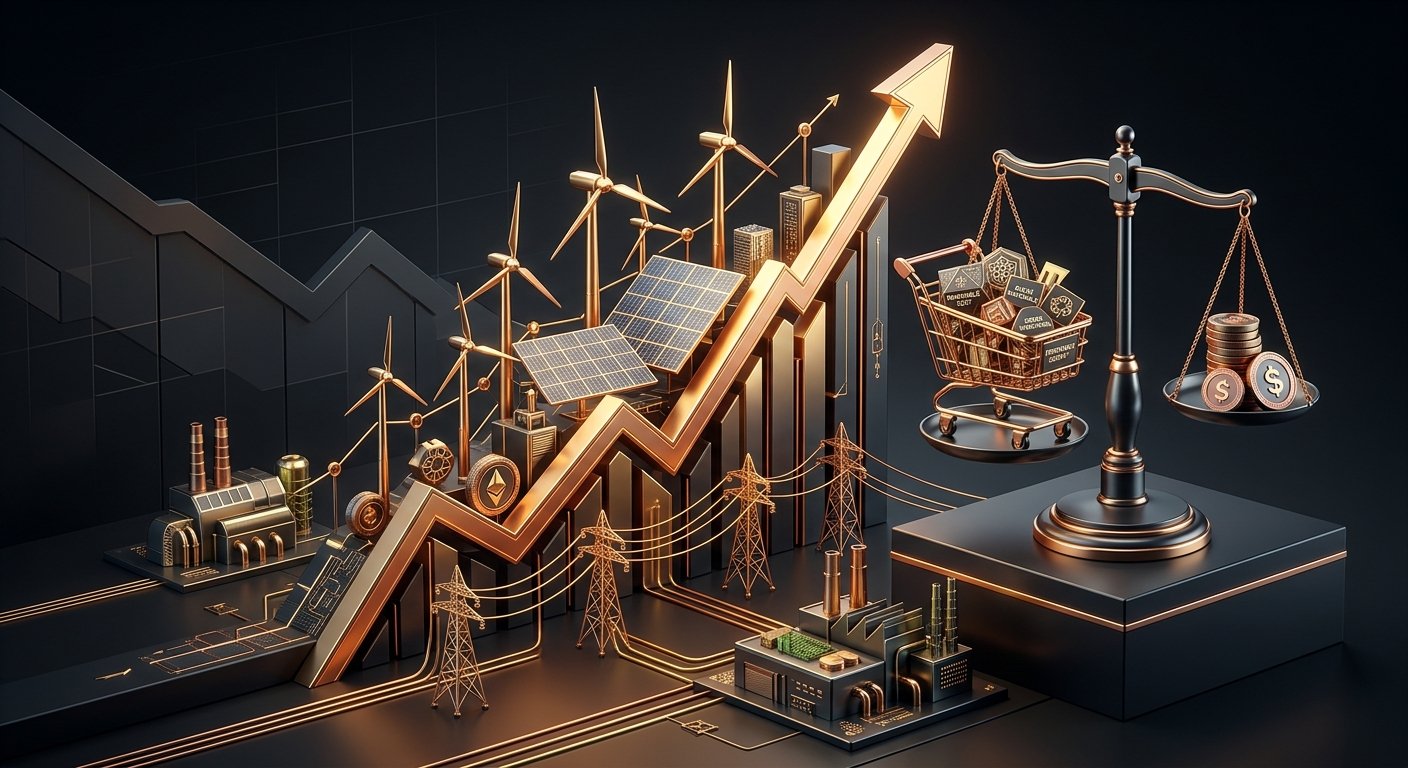
The global economy is undergoing its most profound structural transformation since the Industrial Revolution, where balancing net-zero targets with sustainable market has become a top strategic priority. As climate policies tighten and institutional investors demand rigorous ESG (Environmental, Social, and Governance) compliance, governments and multinational corporations face a complex economic mandate. They must aggressively decarbonize their operational footprints while simultaneously expanding industrial output and maintaining profitability.
Achieving carbon neutrality cannot come at the expense of energy security, grid reliability, or economic stability. Rather than treating environmental sustainability and corporate profitability as opposing forces, leading economies and forward-thinking enterprises are developing hybrid frameworks that allow clean energy deployment to actively drive new market expansion and long-term capital creation.
Key Takeaways
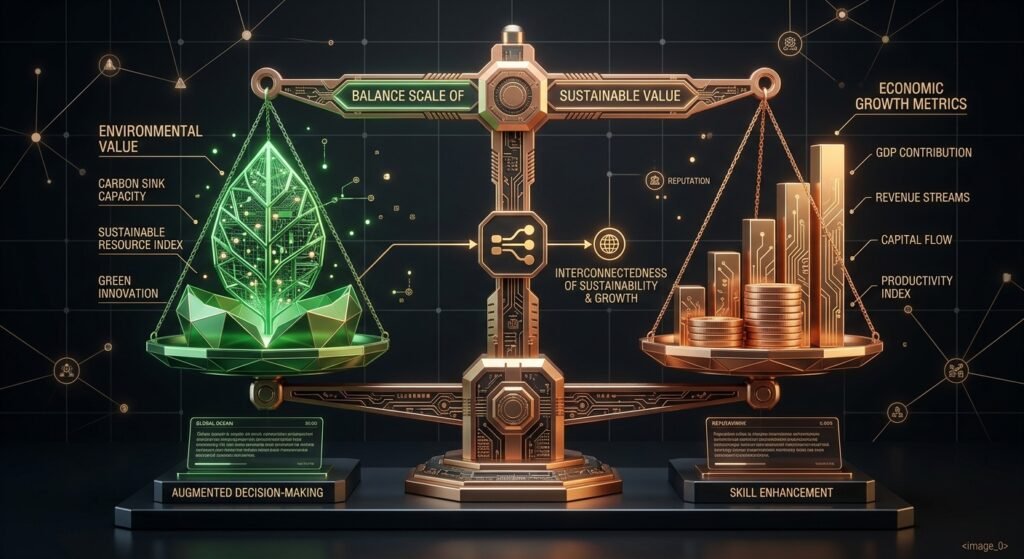
- The Dual Mandate: Modern economic policy must align climate mitigation goals with stable industrial power supply and GDP expansion.
- Capital Allocation Shift: Trillions in private and public capital are redirecting toward renewable infrastructure, carbon capture, and green hydrogen projects.
- Transition Realities: Fossil fuels remain a necessary bridging energy source during the capital-intensive deployment phase of grid-scale renewable storage.
- Competitive Advantage: Businesses that proactively integrate energy efficiency and low-carbon technologies lower compliance risks and capture new green market share.
Core Pillars for Harmonizing Climate Mandates and Economic Expansion
1. Phased Energy Transitions and Baseline Security
Solar and wind power have achieved cost parity with fossil fuels in many global regions, but grid intermittency remains a major hurdle for heavy industry. Balancing net-zero targets with sustainable market growth relies heavily on firm baseline energy options—such as modern nuclear technology, geothermal power, and liquefied natural gas (LNG)—to ensure manufacturing grids remain stable during peak production cycles.
2. Strategic Deployment of Carbon Capture and Hydrogen
For hard-to-abate sectors like steel, cement, chemical processing, and international maritime freight, direct electrification is technically challenging. Heavy industries are investing heavily in carbon capture, utilization, and storage (CCUS) alongside green hydrogen networks to neutralize emissions without halting plant operations.
3. Capital Markets and Carbon Pricing Ecosystems
Compliance carbon markets and voluntary credit exchanges give enterprises a financial mechanism to internalize environmental costs. By putting an explicit price on carbon emissions, regulators incentivize corporate R&D spending toward low-emission manufacturing models.
Industry Sector Analysis: Decarbonization vs. Profitability
The challenges of balancing net-zero targets with sustainable market growth vary significantly across commercial sectors:
| Industry Sector | Decarbonization Challenge | Growth Opportunity | Primary Transition Strategy |
| Manufacturing & Heavy Industry | High energy intensity and high heat requirements. | Green premium product pricing and low-carbon materials supply. | On-site solar/wind, waste heat recovery, hydrogen-powered furnaces. |
| Commercial Real Estate | High embodied carbon in buildings and HVAC electricity usage. | Increased asset valuations and lower tenant operational overhead. | Smart building automation, heat pump integration, retrofitting. |
| Transportation & Logistics | Heavy fuel reliance for fleet trucking and ocean shipping. | Capture of green logistics market share and corporate supply chain contracts. | Fleet electrification, bio-LNG, synthetic sustainable aviation fuels (SAF). |
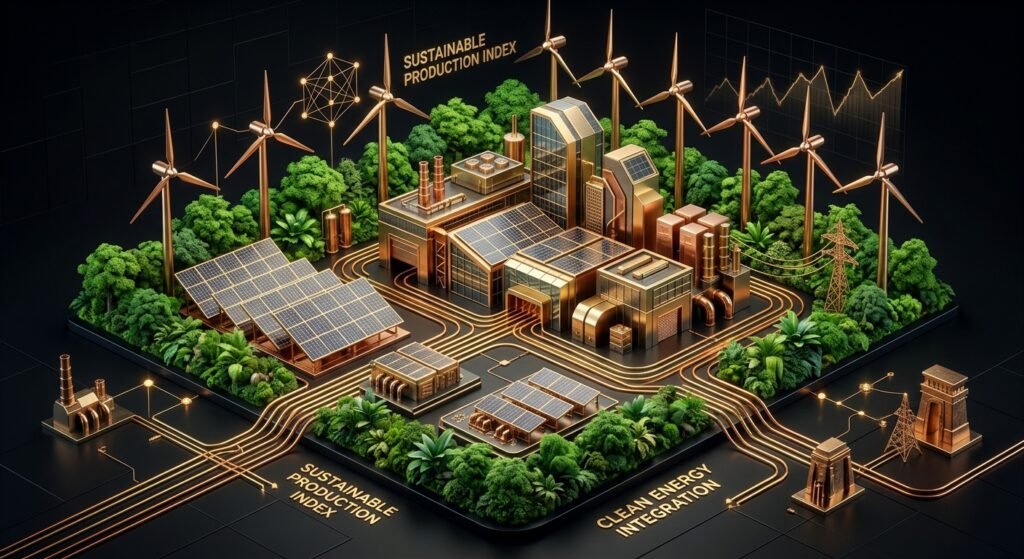
Corporate leadership teams seeking success in balancing net-zero targets with sustainable market growth must establish clear, data-driven operational pathways:
- Conduct Double Materiality Audits: Measure both how climate change impacts your company’s balance sheet and how your business operations impact the surrounding environment.
- Prioritize Energy Efficiency First: Energy demand reduction through smart building systems and process optimization delivers immediate cost savings, providing capital to fund larger decarbonization CapEx projects.
- De-Risk Green Supply Chains: Work closely with tier-1 and tier-2 suppliers to audit Scope 3 emissions, ensuring compliance with evolving international trade regulations and carbon tariffs.
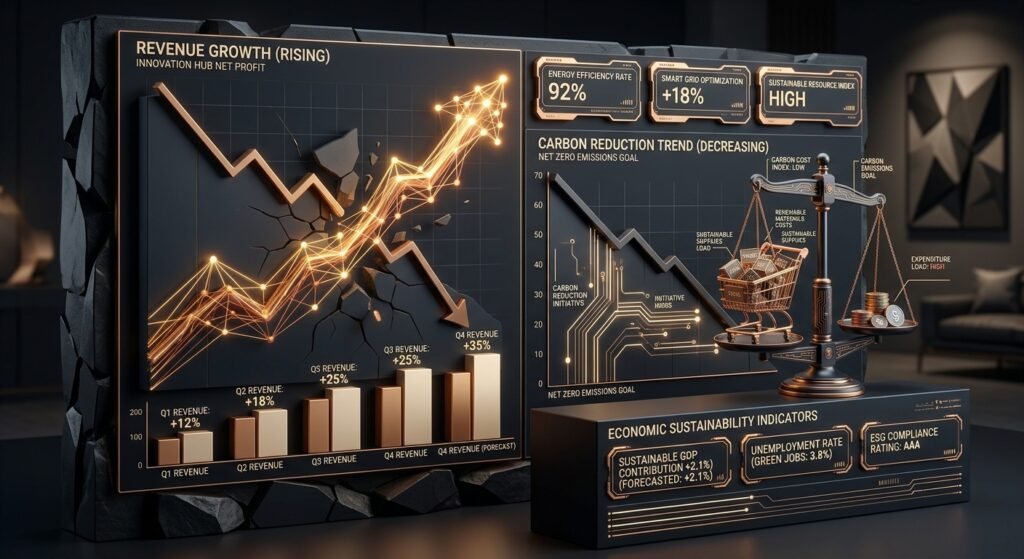
Frequently Asked Questions (FAQs)
What does balancing net-zero targets with sustainable market growth mean for businesses?
It means implementing strategies to lower carbon emissions and meet environmental mandates without compromising profitability, energy security, or operational expansion.
How do carbon border tariffs impact global trade growth?
Carbon border adjustments levy tariffs on imported goods from countries with weaker climate policies. This encourages international manufacturers to decarbonize their supply chains to maintain competitive export pricing.
Can renewable energy reliably support heavy industrial growth?
While solar and wind provide cheap bulk electricity, heavy industry requires continuous base-load power. Achieving full reliability requires pairing renewables with advanced battery storage, green hydrogen, nuclear energy, or carbon capture systems.