
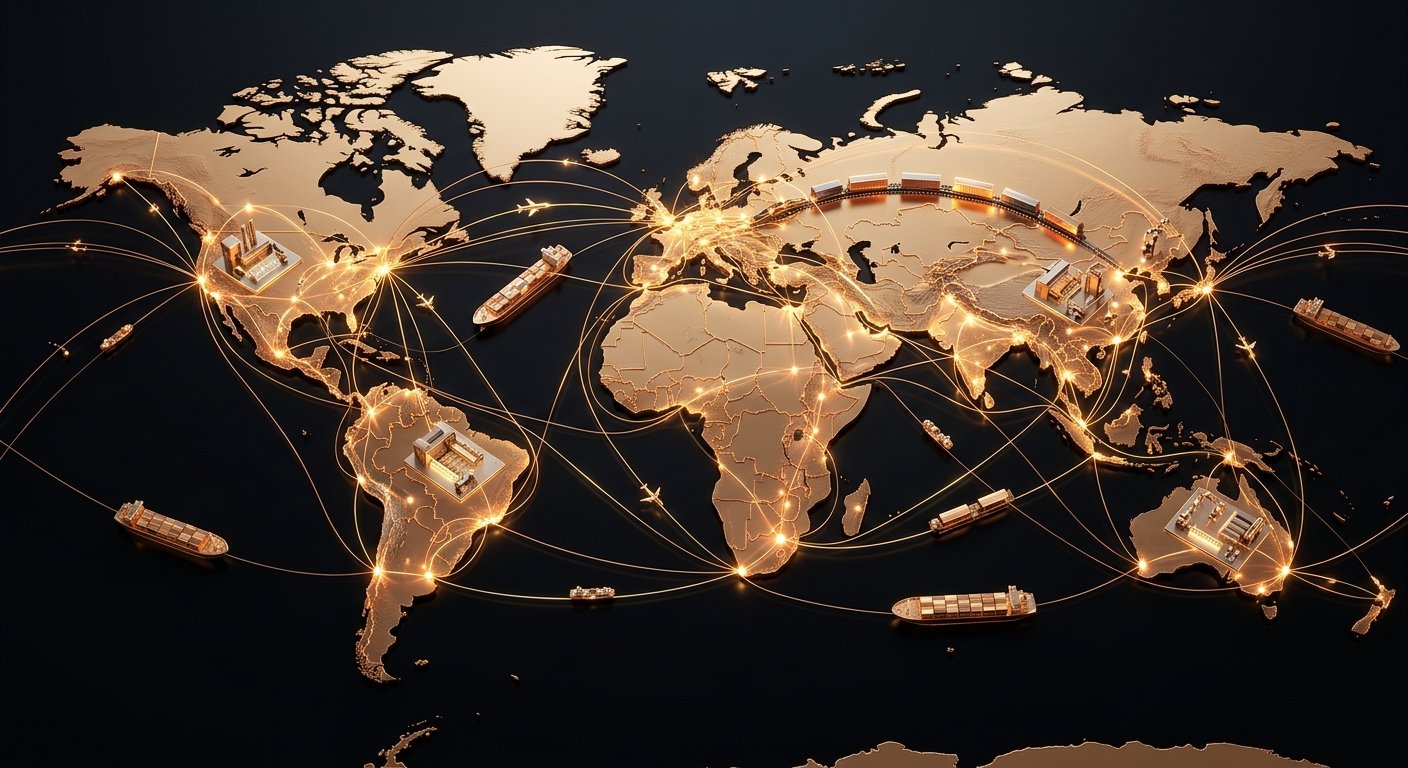
For decades, the global economy operated on a single core principle: cost minimization. Multinational corporations built expansive, hyper-lean supply chains designed to source materials and assemble products wherever labor and overhead were cheapest. However, recent economic shocks, geopolitical tensions, trade tariffs, and sudden shipping bottlenecks have exposed the extreme fragility of long-distance, single-source reliance.
Today, efficiency alone is no longer enough. World trade is undergoing a structural paradigm shift toward resilience, agility, and political alignment. Central to this transition is the strategic rise of nearshoring and friendshoring networks, which are fundamentally altering how goods, capital, and technology flow across borders.
Instead of relying solely on distant manufacturing hubs, global leaders are reconfiguring their operations into regionalized trade ecosystems and geopolitical alliances.
Key Takeaways
- Shift from Efficiency to Security: Modern global supply chains prioritize risk reduction, operational continuity, and geopolitical alignment over absolute lowest-cost production.
- Nearshoring Reduces Distance Risk: Moving manufacturing closer to primary consumer markets cuts lead times, lowers shipping volatility, and improves supply chain agility.
- Friendshoring Secures Strategic Goods: Relocating critical industries (semiconductors, green energy, pharmaceuticals) to politically allied nations protects national and corporate security.
- Dual Trade Networks: Corporations are building parallel regional trade structures to comply with shifting international trade regulations and tariff structures.
- Nearshoring: The practice of relocating manufacturing or business processes to geographically close countries within the same region or time zone. For example, North American companies expanding facilities in Mexico, or Western European firms moving production to Eastern Europe or North Africa.
- Friendshoring: The policy of restricting sourcing and manufacturing to countries with shared values, strong diplomatic ties, and low political conflict risk. Friendshoring is governed by ideological alignment rather than physical distance alone.
Together, the strategic rise of nearshoring and friendshoring networks creates a hybrid logistics framework where supply networks are both closer to home and politically protected.
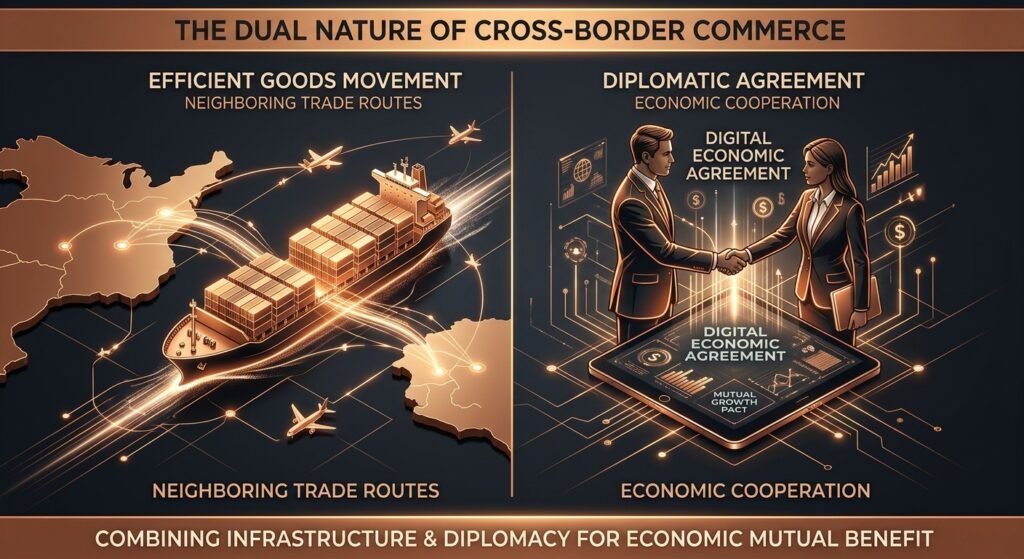
Macroeconomic Drivers Behind the Network Shift
Several macro factors are accelerating the strategic rise of nearshoring and friendshoring networks across global industries:
1. Geopolitical Realignment and Tariff Pressures
Rising trade restrictions, technology export controls, and shifting tariff policies have made single-region reliance financially risky. Governments increasingly view supply chain security in critical sectors—such as advanced semiconductors, rare earth minerals, and electric vehicles—as a matter of national defense.
2. Transport Bottlenecks and Shipping Volatility
Long-distance ocean freight remains susceptible to regional conflicts, fuel price spikes, and canal delays. Shorter transportation corridors shift transit from complex maritime routes to cross-border rail and trucking networks, dramatically improving lead-time predictability.
3. Inventory and Capital Optimization
During crises, traditional “Just-in-Time” (JIT) inventory models often collapse into costly stockouts. Regionalized supply chains allow enterprises to implement flexible “Just-in-Case” buffers without holding excess capital in ocean transit for months at a time.
Industry Case Studies: Nearshoring and Friendshoring in Action
The strategic rise of nearshoring and friendshoring networks is especially visible across three key global sectors:
| Industry Sector | Primary Strategy | Key Regional Hubs | Strategic Benefit |
| Automotive & Clean Tech | Nearshoring | Mexico, Central Europe, Vietnam | Faster turnaround, reduced freight emissions, tariff compliance. |
| Semiconductors & Tech | Friendshoring | United States, Japan, India, South Korea | Protection of IP, critical raw material security, export compliance. |
| Pharmaceuticals & Healthcare | Hybrid | Eastern Europe, North America, India | Active Pharmaceutical Ingredient (API) safety and fast regulatory approval. |

Structural Challenges in Building Regionalized Networks
While the benefits are significant, transitioning to nearshore and friendshore networks presents complex implementation hurdles:
- Higher Capital Expenditure (CapEx): Building or leasing new manufacturing units in allied or nearby regions requires heavy upfront investment in machinery, facilities, and logistics setup.
- Labor and Infrastructure Gaps: Expanding into new regional manufacturing hubs often tests local infrastructure limits—such as power grid stability, port capacities, and skilled labor availability.
- Regulatory and Compliance Burden: Operating multiple regional nodes requires navigating fragmented customs regimes, local tax codes, and complex rules of origin.
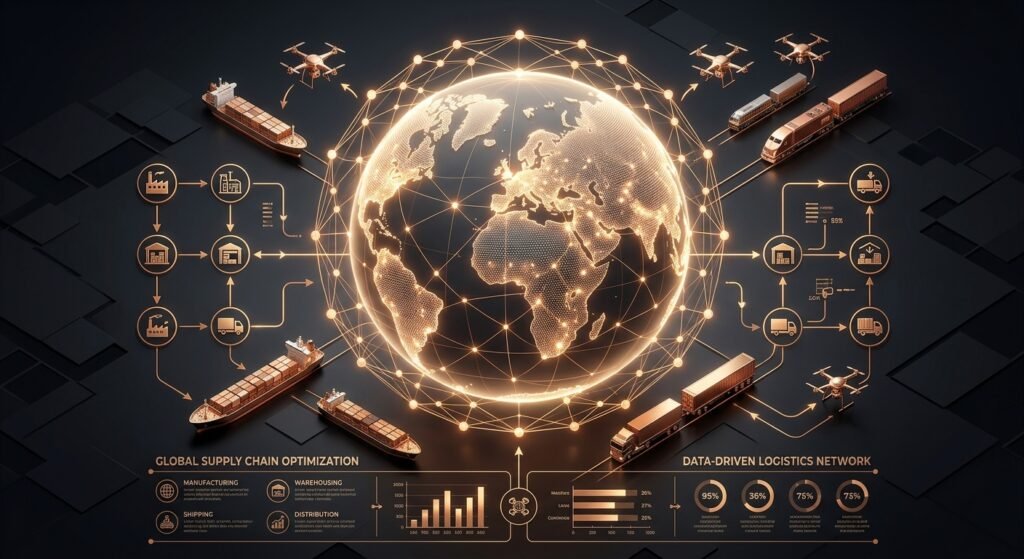
The Strategic Path Forward for Global Enterprises
To capitalize on the strategic rise of nearshoring and friendshoring networks, corporate decision-makers must adopt a structured risk management model:
- Perform Value-Chain Vulnerability Audits: Identify single-source components and rate suppliers based on political, geographical, and operational risk factors.
- Adopt a Multi-Tier Sourcing Model: Maintain primary regional hubs near key markets while keeping secondary suppliers in allied nations to balance cost and resilience.
- Leverage Supply Chain Visibility Tech: Deploy advanced planning tools and IoT tracking to monitor regional inventory flows in real time.
Conclusion
The strategic rise of nearshoring and friendshoring networks marks a fundamental evolution in modern economics. The era of unconstrained hyper-globalization focused purely on cost reduction has evolved into a balanced economic model built on stability, proximity, and geopolitical trust. By restructuring supply chains around regional agility and allied trade partnerships, forward-looking enterprises can successfully build long-term resilience against global uncertainty.
Frequently Asked Questions (FAQs)
What is driving the strategic rise of nearshoring and friendshoring networks?
The primary drivers include geopolitical instability, trade tariffs, supply chain disruptions, rising shipping expenses, and government incentives targeting national supply security.
How does nearshoring differ from traditional offshoring?
Traditional offshoring moves production overseas primarily to minimize labor costs, regardless of distance. Nearshoring brings manufacturing closer to the target market to cut transit times and lower supply risks.
Can friendshoring completely replace global trade networks?
No. Friendshoring is designed to protect critical and sensitive industries (like microchips, energy, and defense) rather than eliminate global commerce entirely. Most companies deploy a hybrid model combining global, nearshore, and friendshore partners.
Does nearshoring increase product prices for consumers?
In the short term, relocating facilities can increase operational costs. However, in the long term, it reduces costly supply disruptions, shipping delay penalties, and tariff spikes, helping stabilize consumer prices over time.
1 thought on “Rise of Nearshoring and Friendshoring Networks”