

Evaluating the future trajectory of international markets requires looking at long-term macroeconomic projections. The latest world economic outlook models reveal a historic shift in global power, moving away from traditional Western dominance toward fast-growing emerging markets. As technological innovation, demographic shifts, and productivity enhancements reshape international trade, understanding which nations will lead the global gross domestic product (GDP) rankings is critical for strategic investors and policymakers.
Key Takeaways
- The Shift to Asia: Emerging economies, particularly across Asia, are projected to capture a significantly larger share of global GDP over the coming decades.
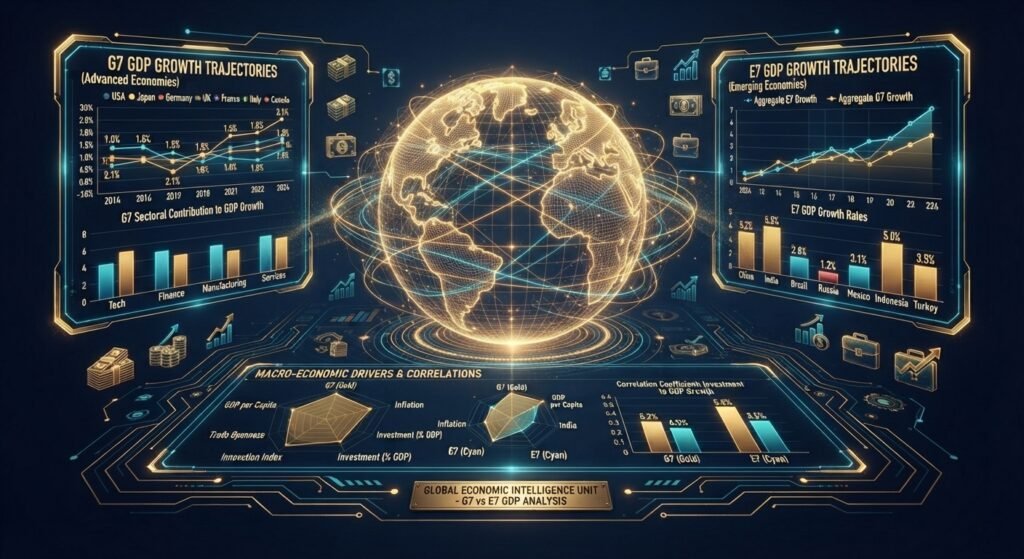
- G7 vs. E7 Dynamics: While G7 nations maintain high per-capita incomes, the E7 emerging bloc is expanding at nearly twice the average speed of advanced economies.
- Purchasing Power Parity (PPP): Long-term macroeconomic forecasts typically rely on PPP metrics to accurately reflect localized living standards and true output value.
- Technological Catalysts: Artificial intelligence, green energy transitions, and digital infrastructure will dictate which economies successfully avoid middle-income traps.
Macroeconomic Shifts: How the Global Order is Changing
To understand the trajectory of the world economic outlook, economists analyze long-term structural drivers such as working-age population growth and capital accumulation. Historically, Western G7 nations held an unchallenged monopoly over the top economic tiers.
Comparative Projections: Top Economies in 2030 and 2050
A review of macroeconomic forecasting data highlights the structural ascent of emerging market powerhouses:
| Rank | Projected 2030 Economy (PPP) | Projected 2050 Economy (PPP) | Primary Growth Catalyst |
| 1 | China | China | Advanced manufacturing, domestic consumption, and tech |
| 2 | United States | India | Massive demographic dividend and digital scaling |
| 3 | India | United States | Deep capital markets and technological innovation |
| 4 | Indonesia | Indonesia | Natural resources, digital economy, and regional trade |
| 5 | Japan | Brazil | Agricultural output, mining, and green energy transition |
Key Drivers Shaping the Next Decades
1. The Demographic Dividend vs. Aging Populations
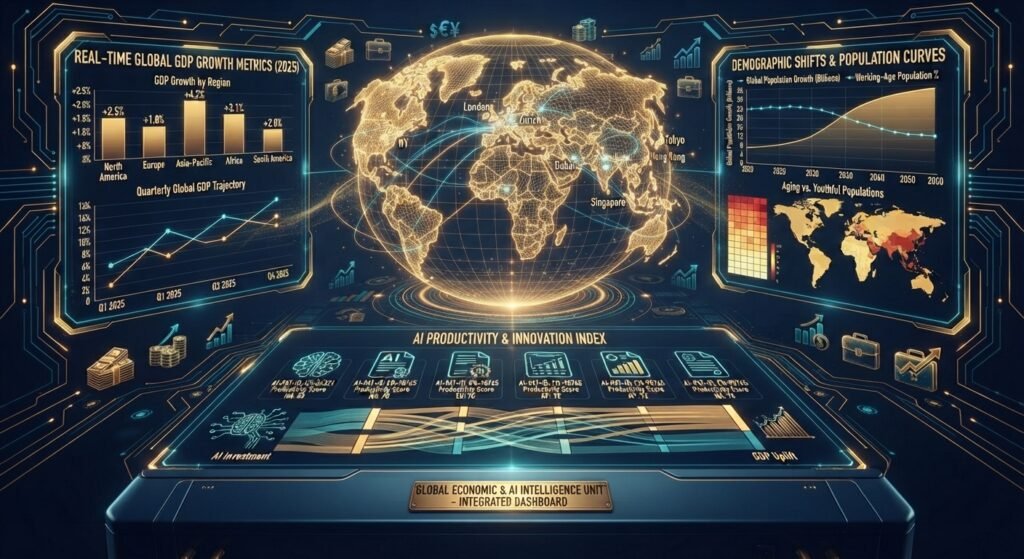
A primary differentiator in the modern world economic outlook is labor force dynamics. While nations like Japan, Germany, and parts of Southern Europe face rapid population aging and shrinking workforces, countries like India, Indonesia, and Nigeria possess young, expanding populations capable of driving decades of sustained economic output.
2. Technological Disruption and Artificial Intelligence
The integration of artificial intelligence and automated industrial systems serves as a powerful equalizing force. Economies that successfully foster digital ecosystems and invest heavily in human capital will bypass traditional industrialization phases, accelerating their rise up the global GDP ladder.
Challenges and Downside Risks to Long-Term Growth
Despite bullish long-term projections, structural risks threaten to disrupt the projected world economic outlook:
- Geopolitical Fragmentation: Rising trade protectionism and regional conflicts can choke global supply chain velocity and reduce cross-border investment.
- Climate Vulnerability: Extreme weather events and the complex costs of the green energy transition disproportionately impact developing economies.
- Institutional Governance: Emerging markets must continuously strengthen legal transparency, anti-corruption frameworks, and infrastructure networks to sustain investor confidence.

Conclusion
The evolution outlined in the global world economic outlook highlights a historic decentralization of economic power. While the United States, China, and India will continue to anchor global output, the rapid rise of economies like Indonesia, Brazil, and Mexico proves that future prosperity belongs to nations that embrace structural reforms, innovation, and global trade integration.
Frequently Asked Questions (FAQs)
What does the world economic outlook predict for the largest economy by 2050?
China and India are projected to hold the top two positions globally in terms of GDP by PPP, with the United States positioned closely behind.
Why do forecasters use Purchasing Power Parity (PPP) for long-term outlooks?
PPP adjusts for price level differences between countries, providing a much more accurate reflection of true domestic output, resource command, and living standards.
Which emerging markets are growing the fastest?
Asian economies such as India, Indonesia, and Vietnam are currently registering some of the fastest medium-to-long-term growth rates globally.
How do demographic shifts impact the global economic balance?
Nations with young, expanding populations gain a competitive advantage in labor supply and domestic consumption, whereas aging societies face labor shortages and rising fiscal burdens.
1 thought on “World Economic Outlook: Top 10 Economies by 2030”