
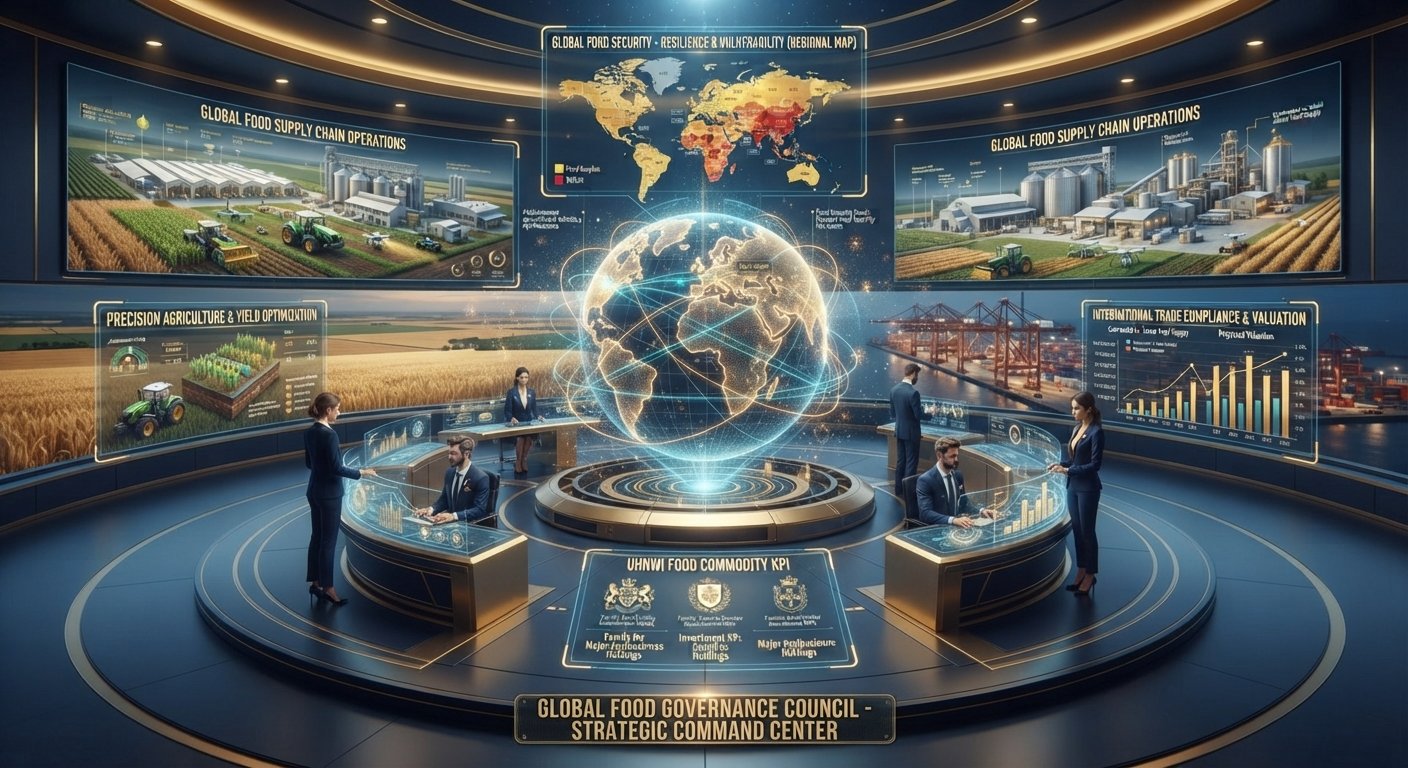
Evaluating macro-economic stability and international security requires looking past industrial output to analyze the foundational infrastructure of sustenance. Across international markets, agricultural powerhouses serve as the bedrock of global food wealth. As climate volatility, population shifts, and supply chain disruptions test international resilience, the capacity of specific nations to cultivate, process, and export food commodities dictates both geopolitical leverage and economic prosperity.
Key Takeaways
- Export Concentration: A small group of sovereign nations accounts for a disproportionate share of global agricultural export value, directing international food flows.
- The Scale vs. Efficiency Model: While expansive landmasses like the US and Brazil dominate bulk grain and oilseed production, technologically advanced nations like the Netherlands maximize output through intensive agri-tech.
- Strategic Geopolitics: Control over essential calories—such as wheat, soybeans, and corn—grants agricultural leaders immense diplomatic leverage in trade negotiations.
- Vulnerability to Macro Shocks: Global food wealth is increasingly sensitive to fertilizer costs, logistics bottlenecks, and regional conflicts impacting key breadbasket zones.
Macroeconomic Mechanics of Sovereign Food Production
To understand how agricultural powerhouses accumulate long-term economic strength, economists examine the intersection of arable land, technological capital, and logistical efficiency. Unlike manufacturing sectors that rely on imported raw components, agricultural dominance is deeply rooted in natural endowments paired with advanced mechanized scaling.
When nations such as the United States, Brazil, and Canada optimize their crop yields, they generate massive trade surpluses. These agricultural exports not only stabilize domestic balance sheets but also establish critical trade corridors with major importing regions across Asia, the Middle East, and North Africa.
Comparative Overview of Leading Agricultural Exporters
A review of contemporary international food trade highlights how different geographic models achieve market leadership:
| Agricultural Leader | Primary Export Commodities | Core Competitive Advantage | Global Market Role |
| United States | Soybeans, corn, wheat, beef | Massive land scale, advanced R&D, deep logistics | Leading global bulk grain exporter |
| Brazil | Soybeans, coffee, sugar, beef | Favorable tropical climate, rapid frontier expansion | Dominant Southern Hemisphere supplier |
| Netherlands | Horticulture, dairy, processed foods | Advanced greenhouse technology, strategic European hub | High-value agricultural trade leader |

Channels Translating Crop Yields Into National Wealth
1. Capitalizing on Global Commodity Markets
The financial strength of agricultural powerhouses stems from their ability to dictate or heavily influence international pricing benchmarks for essential commodities. By scaling production of high-demand items like oilseeds and grains, these nations capture substantial foreign exchange revenues, cushioning their broader macroeconomic stability.
2. Agribusiness Integration and Value-Added Processing
Raw commodity harvesting represents only the baseline of food wealth. Advanced agricultural economies invest heavily downstream into food processing, cold-chain logistics, and biotechnology. This transformation shifts nations from simple raw-material suppliers to high-margin global food conglomerates.

Navigating Downside Risks and Environmental Pressures
Despite their commanding market position, maintaining long-term stability within the network of agricultural powerhouses requires continuous navigation of structural headwinds:
- Climate and Weather Vulnerability: Prolonged droughts, unseasonal floods, and shifting precipitation patterns can instantly disrupt harvest forecasts, triggering global food inflation.
- Input Cost Volatility: Modern industrial farming relies heavily on synthetic fertilizers, fuel, and advanced chemicals, exposing producers to energy market price spikes.
- Sustainability and Land Use Mandates: Balancing intensive chemical and land use with stringent international environmental compliance requires massive capital outlays for green farming technologies.

Conclusion
The enduring influence of agricultural powerhouses demonstrates that food security is fundamentally intertwined with global economic power. Nations that successfully blend natural arable assets with cutting-edge agrotechnology and resilient supply chains will continue to dictate international trade terms and secure long-term prosperity.
Frequently Asked Questions (FAQs)
What defines the leading agricultural powerhouses globally?
They are nations that combine vast arable land, advanced farming technology, and efficient infrastructure to produce and export massive volumes of food commodities to international markets.
Which countries lead the world in agricultural exports?
The United States, Brazil, and the Netherlands consistently rank among the world’s largest agricultural exporters by total economic value.
How does technology impact modern agricultural wealth?
Precision farming, automated irrigation, advanced seed genetics, and smart supply chain logistics allow agricultural leaders to maximize crop yields while reducing resource waste.
Why is food export concentration a potential economic risk?
Because a small number of countries control a major portion of global grain and oilseed exports, any localized weather disaster or geopolitical conflict in those regions can trigger worldwide food price inflation.
1 thought on “Agricultural Powerhouses Driving Global Food Wealth”