
Analyzing the richest royal families in the world requires looking far beyond personal bank accounts to evaluate vast state-administered holdings, crown real estate, and strategic international equities. While public curiosity often focuses on historic jewels and royal estates, modern ruling dynasties control multi-billion-dollar corporate portfolios, sovereign wealth funds, and global financial assets that shape international markets.
Key Takeaways
- Sovereign vs. Personal Wealth: Measuring royal net worth requires separating private fortunes from state-managed trust holdings governed by crown bureaus or public investment funds.
- Hydrocarbon Megastructures: Sovereign dynasties in the Middle East oversee collective assets scaling into hundreds of billions—and in some cases, over a trillion dollars.
- Global Asset Diversification: Modern monarchs derive revenue not just from natural resources, but from international tech equities, banking networks, and prime commercial real estate.
- Institutional Governance: Property holdings are frequently structured through constitutional trusts, parliamentary acts, or sovereign decree rather than simple individual deeds.
The Mechanics of Royal Net Worth and Sovereign Assets
Understanding how monarchy wealth is accumulated demands a clear look at institutional frameworks. Unlike private entrepreneurs who build commercial businesses from scratch, reigning monarchs oversee generational assets tied directly to state economic structures.
Comparative Breakdown of the Richest Royal Families
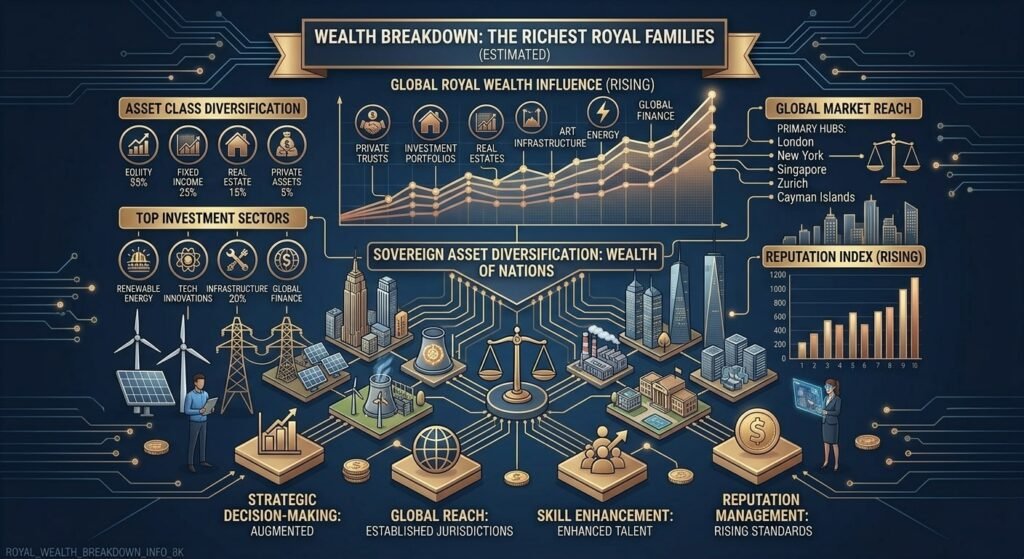
Evaluating the richest royal families in the world highlights diverse revenue origins, ranging from energy reserves to institutional real estate trusts:
| Sovereign Dynasty / Family | Country / Region | Estimated Family Net Worth | Primary Revenue Source |
| House of Saud | Saudi Arabia | $1.4 Trillion (Collective) | Sovereign investment funds, energy reserves, and industrial holdings |
| Al Sabah Family | Kuwait | $360 Billion | Petroleum reserves and international investment portfolios |
| Al Thani Family | Qatar | $335 Billion | LNG exports and global corporate acquisitions |
| Chakri Dynasty | Thailand | $43 Billion | Crown Property Bureau real estate and corporate equities |
| House of Windsor | United Kingdom | $28 Billion (Collective) | Sovereign estates, private land tracts, and ancestral assets |
Key Drivers of Modern Royal Portfolios
1. Transitioning from Oil to Global Tech & Equities
Historically, elite sovereign dynasties built capital on natural resource revenues. Today, managing the assets of the richest royal families in the world involves aggressive diversification into international venture capital, artificial intelligence, renewable energy, and Western equity markets.
2. Commercial Real Estate and Urban Dominance
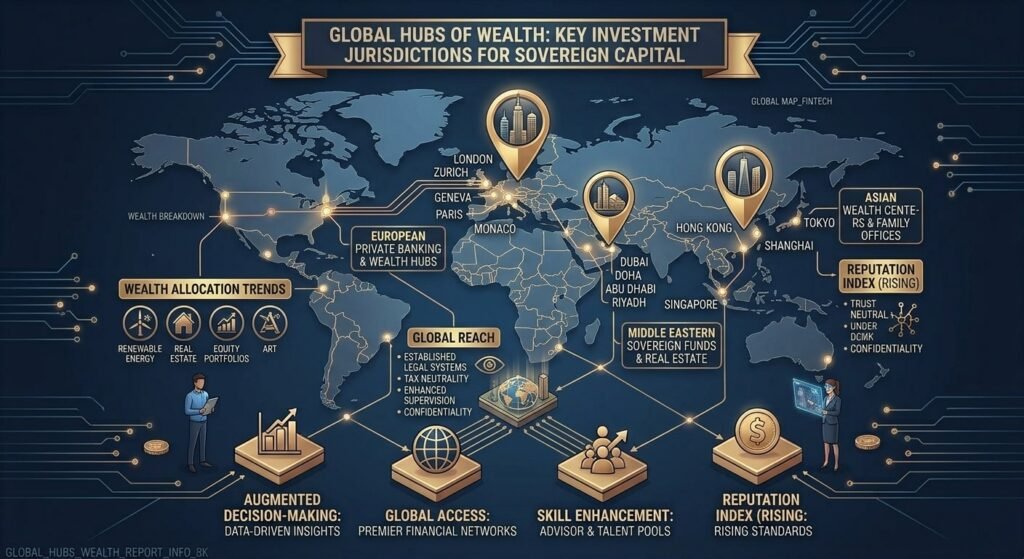
Physical property remains a primary pillar of dynastic wealth. From commercial office towers in London, New York, and Paris to extensive agricultural estates, real estate holdings ensure multi-generational financial stability.
Transparency and Public Scrutiny in Modern Finance
As international demands for financial transparency grow, scrutiny surrounding royal financial disclosures has intensified. Watchdog groups and citizens increasingly demand clear boundaries between state treasury budgets and private dynastic commercial activities.
Conclusion
Examining the richest royal families in the world reveals a unique intersection between historic lineage and modern global finance. Whether sustained by Middle Eastern energy funds or European property trusts, these dynasties maintain a profound economic footprint across the modern global economy.
Frequently Asked Questions (FAQs)
How is the net worth of the richest royal families calculated?
Calculating royal wealth requires distinguishing between personal private fortunes, inherited family estates, and state-owned assets managed in trust for the public benefit.
Which is the richest royal family in the world?
The House of Saud holds the highest collective wealth estimate, with combined family assets exceeding $1.4 trillion due to vast energy reserves and sovereign investment funds.
Do all reigning monarchs possess multi-billion-dollar fortunes?
No. While Middle Eastern and Asian ruling dynasties hold massive sovereign portfolios, many European constitutional monarchs operate under regulated state stipends and private ancestral estates.
Why do royal families hold property in legal trusts?
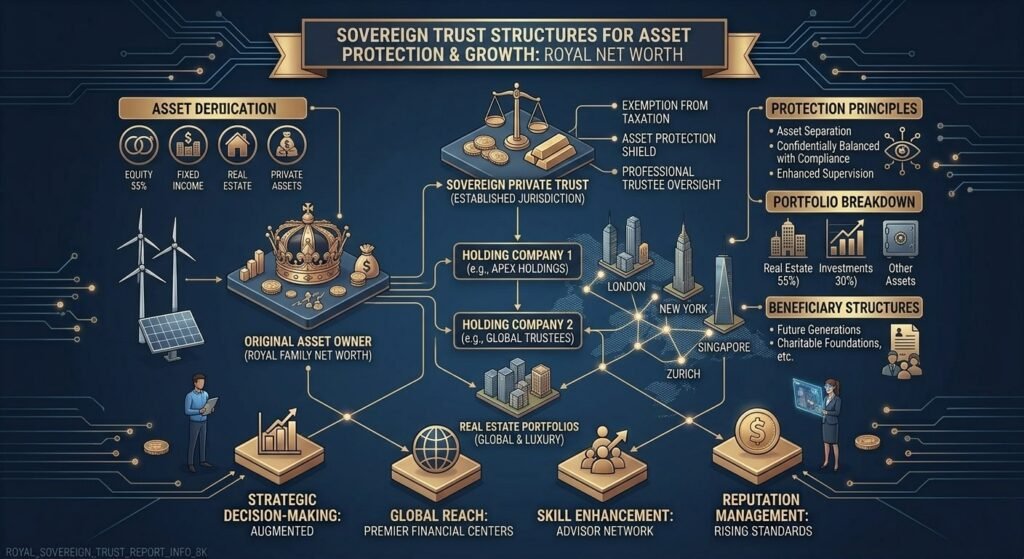
Holding properties through crown trusts shields historic estates from fragmentation, preserves national heritage, and optimizes dynastic asset protection under governing legislation.
1 thought on “Richest Royal Families in the World: Monarchy Wealth”